

Antibiotic resistance is one of the biggest challenges humans have ever faced. If it is left unchecked, it could return modern medicine to the dark ages. There is nothing left in the antibiotic armory, and the development of new drugs isn’t keeping pace with the speed of resistance. With an aim to preserve the life of existing antibiotics and to guide better clinical decisions, VMRC has targeted its efforts towards novel drug delivery mechanisms and toxicity reduction of antibiotics.
“AMR has attracted the attention of multiple international agencies, such as the UN and the WHO, to name a few. A recent report suggests that if resistance is left unchecked, by 2050, over 10 million people will die every year from AMR alone.”

What is AMR?
Antimicrobial Resistance (AMR) is the ability of microorganisms like bacteria (causes pneumonia), viruses (HIV), and some parasites (Malaria) to stop antimicrobials such as antibiotics, antivirals and antimalarial respectively from working against it.
How big is the problem?
VERY BIG! In fact, the global problem of AMR has attracted the attention of multiple international agencies such as the UN and the WHO to name a few. A recent report suggests that if resistance is left unchecked, by 2050 over 10 million people will die every year from AMR alone.


"A continued rise in resistance by 2050 would lead to 10 million people dying every year and a reduction of 2% to 3.5% in Gross Domestic Product (GDP). It would cost the world up to 100 trillion USD."
-THE REVIEW ON ANTIMICROBIAL RESISTANCE


Ways of Acquiring Resistance
Bacteria and other pathogens continuously evolve to resist the mechanisms used by antibiotics to combat them. The most common way of resistance is when bacteria makes its cell wall impermeable, making the drug ineffective as it cannot reach the target.
Reasons for Resistance
Frivolity in the use of antibiotics, including that in humans, agriculture and veterinary use, is the major reason for the spread of resistance. Other reasons include lack of adequate infection control in hospital settings, lack of surveillance mechanisms to track the resistance.

"Without urgent action, we are heading for a post-antibiotic era, in which common infections and minor injuries can once again kill."
-WORLD HEALTH ORGANIZATION

Research Pipeline
We are fuelling our research pipeline with innovative solutions to solve some of the world's most important and toughest healthcare challenges in the areas of Antimicrobial Resistance.
The Troublemaking Pathogens

A. baumannii
Gram negative
A. baumannii
Gram negative
 Strain: Gram-negative
 Characterstics: short, almost round, rod-shaped (coccobacillus) aerobic, pleomorphic and non-motile.
 Habitat: commonly found in water and soil.
 Causes: nosocomial bloodstream infections in intensive care units (ICUs) , life-threatening infections such as bacteremia, pneumonia (hospital-aquired), meningitis and surgical site infections
 Mortality: the mortality rates of patients with A. baumannii infection have been reported to be 26.0–55.7% [1]Reference: Xiao D, Wang L, Zhang D, Xiang D, Liu Q, Xing X. Prognosis of patients with Acinetobacter baumannii infection in the intensive care unit: A retrospective analysis. Experimental and Therapeutic Medicine. 2017;13(4):1630-1633. doi:10.3892/etm.2017.4137.
 Resistance to: resistance to most first-line antibiotics
 Mechanisms of resistance: D oxacillinases (OXA type), extended spectrum beta lactamases (ESBL) , metallo- beta lactamases (MBL). Biofilm formation and overproduction of efflux systems.

P. aeruginosa
Gram negative
P. aeruginosa
Gram negative
Strain: Gram-negative
Characterstics: rod-shaped, asporogenous, and monoflagellated bacterium. It has a pearlescent appearance and grape-like or tortilla-like odour.
Habitat: P. aeruginosa are commonly found in soil, water and plants
Causes: serious infections in immunocompromised patients with cancer and patients suffering from severe burns and cystic fibrosis (CF), second most common organism isolated in nosocomial pneumonia (17% of cases), the third most common organism isolated in both urinary tract infection (UTI) and surgical site infection (11% of cases), and the fifth most common organism isolated from all sites of nosocomial infection (9% of cases) [1]Reference: Fujitani, S., K.S. Moffett and V.L. Yu, 2016. Pseudomonas aeruginosa. http://www.antimicrobe. org/new/b112.asp
 Prevalance: An estimated 51,000 healthcare-associated P. aeruginosa infections occur in the United States each year. More than 6,000 (13%) of these are multidrug-resistant.
Mortality: roughly 400 deaths per year attributed to these infections. Pseudomonas aeruginosa in Healthcare Settings; CDC [2]Reference: https://www.cdc.gov/hai/organisms/pseudomonas.html
Resistance to: many common first-line antibiotics, carbapenems, polymyxins, and more recently tigecycline
Mechanisms of resistance: biofilm formation, Various ESBL and MBL enzymes along with carbapenemases like serine oxacillinases (OXA) and overproduction of the efflux systems such as MexAB-OprM, MexCD-OprJ, MexEF-OprN, and MexXY-OprM.

E. coli
Gram negative
E. coli
Gram negative
Strain: Gram-negative
Characterstics: facultatively anaerobic, rod-shaped, coliform bacterium
Habitat: They are commonly found in the lower intestine of warm-blooded organisms
Causes: Nosocomial infections, which can cause respiratory, urinary, bloodstream and surgical site infections and turn into life-threatening sepsis
Prevalance: E. coli infections cause approximately 265,000 illnesses each year in US
b>Mortality: About 100 deaths each year in USNC DPH: E. coli - NC Epidemiology, 2016. [1]Reference: http://epi.publichealth.nc.gov/cd/diseases/ecoli.html
Resistance to: The ESBL strains are resistant to most β-lactam drugs, and the CRE strains are resistant to most carbapenem drugs.
Mechanisms of resistance: carbapenem-resistant Enterobacteriaceae (CRE), extended spectrum beta lactamases (ESBL) , MBL genes and overexpression of efflux pump genes.

K. pneumoniae
Gram negative
K. pneumoniae
Gram negative
Strain: Gram-negative
Characterstics: nonmotile, encapsulated, lactose-fermenting, facultative anaerobic, rod-shaped bacterium
Habitat: K. pneumoniae is a bacterium that normally lives inside human intestines, where it doesn't cause disease. However, if K. pneumoniae gets into other areas of the body, it can cause a range of different illnesses.
Causes: nosocomial infections, Pneumonia, Bloodstream infections, Wound infections, Surgical site infections, Meningitis and Urinary tract infections.
Prevalance: Carbapenem-resistant Klebsiella is the most common type of CRE, and is responsible for about 7,900 infections according to the Centers for Disease Control and Prevention (CDC).
Mortality: 520 deaths each year Klebsiella pneumoniae in Healthcare Settings; CDC. [1]Reference: https://www.cdc.gov/HAI/organisms/klebsiella/klebsiella.html
Resistance to: resistant to most antibiotics, including carbapenems, which are considered last-resort drugs.
Mechanism of resistance: These bacteria produce enzymes called Klebsiella pneumoniae carbapenemases (KPC), which render the antibiotics ineffective. Few strains are part of a group called carbapenem-resistant Enterobacteriaceae, or CRE.
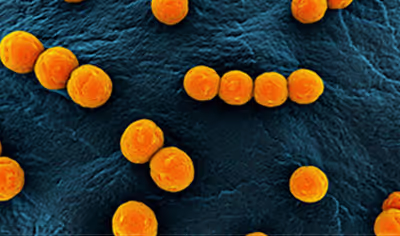
E. faecium
Gram positive
E. faecium
Gram positive
Strain: Gram-positive
Characterstics: Gram-positive, spherical cell that can occur in pairs or chains. The colonies formed are 1-2 mm in length and appear wet. The cells are non-motile.
Habitat: The normal habitat includes the gastrointestinal tract of a multitude of animals but it can also be found in the oral cavity and vaginal tract.
Causes: nosocomial bacteremia, surgical wound infection, endocarditis, and urinary tract infections.
Prevalance: E. faecium has been a leading cause of multi-drug resistant enterococcal infections. Approximately 40% of medical intensive care units in a recent National Healthcare Safety Network report found that the majority of device-associated infections (namely, infections due to central lines, urinary drainage catheters, and ventilators) were due to vancomycin- and ampicillin-resistant E. faecium (80% and 90.4%, respectively).[1]Reference: Gilmore MS, Clewell DB, Ike Y, Shankar N, Agudelo Higuita NI, Huycke MM (2014).Enterococcal Disease, Epidemiology, and Implications for Treatment. In Gilmore MS, Clewell DB, Ike Y. Enterococci: From Commensals to Leading Causes of Drug Resistant Infection.
Resistance to: Some strains have become resistant to vancomycin, penicillin, gentamicin, tetracycline, erythromycin and teicoplanin.
Mechanism of resistance: E. faecium can be highly drug resistant and acquires its drug resistance by plasmids and conjugative transposons as well as chromosomal genes that encode resistance.
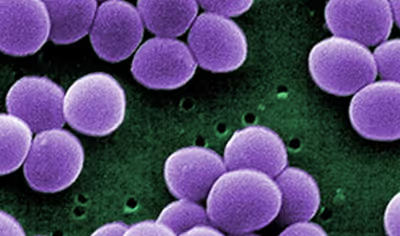
S. aureus
Gram positive
S. aureus
Gram positive
Strain: Gram-positive
Characterstics: round-shaped bacterium
Habitat: Found in the environment and normal human flora, located on the skin and mucous membranes (most often the nasal area) of around 25%-30% of healthy adults and in 25% of hospital or medical workers.
Causes: Staphylococcus aureus is a major bacterial human pathogen that causes a wide variety of clinical manifestations. Skin infections are the most common type of disease produced by Staphylococcus . When the Staph bacteria spread to other organs, they may cause various conditions such as Staphylococcal pneumonia, Endocarditis, Septic arthritis, Thrombophlebitis.
Prevalance: Staphylococcus Infections are common both in community-acquired as well as hospital-acquired settings.[1]Reference: Taylor TA, Unakal CG, 2017. Staphylococcus Aureus. StatPearls. https://www.ncbi.nlm.nih.gov/books/NBK441868/
Resistance to: MRSA strains tend to be resistant to methicillin, nafcillin, oxacillin, and cephalosporins.
Mechanism of resistance: MRSA strains carry a mec gene on the bacterial chromosome, which is a component of the larger Staphylococcal chromosomal cassette mec (SCCmec) region, conferring resistance to multiple antibiotics.
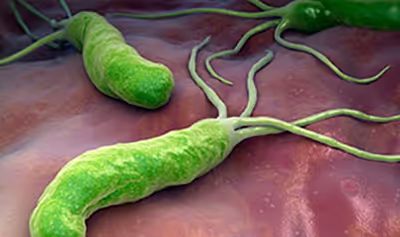
H. pylori
Gram negative
H. pylor
Gram negative
Strain: Gram-negative
Characterstics: Microaerophilic bacterium with helical or spiral shape usually found in the stomach.
Habitat: H. pylori is a ubiquitous organism that is present in about 50% of the global population.
Causes: H. pylori usually does not cause symptoms. But it can break down the inner protective coating in some people's stomachs and cause inflammation. This can lead to gastritis or a peptic ulcer and stomach cancer. H. pylori has also been associated with colorectal polyps and colorectal cancer.
Prevalance: Infection is more common in developing countries than Western countries. Most people get it as a child Helicobacter pylori infection. [1]Reference: https://www.mayoclinic.org/diseases-conditions/h-pylori/symptoms-causes/syc-20356171 https://emedicine.medscape.com/article/176938-overview
Resistance to: resistance to clarithromycin and levofloxacin is increasing worldwide.
Mechanism of resistance: The prevalence of H. pylori metronidazole resistance is at a high level due to the presence of Mtz-resistant genes
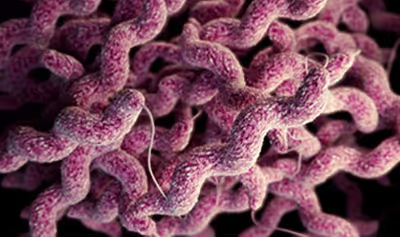
Campylobacter
Gram negative
Campylobacter
Gram negative
Strain: Gram-negative
Characterstics: motile microorganism and appear as comma or s-shaped.
Habitat: The bacteria normally inhabit the intestinal tract of warm-blooded animals such as poultry and cattle, and are frequently detected in foods derived from these animals
Causes: Campylobacter is 1 of 4 key global causes of diarrhoeal diseases. It is considered to be the most common bacterial cause of human gastroenteritis in the world.Prevalance: the bacteria normally inhabit the intestinal tract of warm-blooded animals such as poultry and cattle, and are frequently detected in foods derived from these animals. CDC estimates Campylobacter infection affects more than 1.3 million people every year.
Campylobacter (Campylobacteriosis); [1]Reference: CDC https://www.cdc.gov/campylobacter/index.htmlCampylobacter; WHO http://www.who.int/mediacentre/factsheets/fs255/en/
Resistance to: Campylobacter exhibits intrinsic resistance to novobiocin, bacitracin and vancomycin, polymyxin/colistin.
Mechanism of resistance: due to the absence of appropriate targets and/or low affinity binding to targets.In Campylobacter, mechanisms of antibiotic resistance includes synergy between antibiotic efflux and a second mechanisms such as β-lactamase production, inability of the antibiotic to reach its target due to the change in the expression of the major outer membrane protein.

N. gonorrhoeae
Gram negative
N. gonorrhoeae
Gram negative
Strain: Gram-negative
Characterstics: fastidious, diplococci.
Habitat: Grow and rapidly multiply in the mucous membranes, especially the mouth, throat, and anus of males and females, and the cervix, fallopian tubes, and uterus of the female reproductive tract.
Causes: The sexually transmitted infection (STI) gonorrhea , gonorrhea can also be spread from the mother to child at birth and causes Ophthalmia neonatorum (purulent conjunctivitis).
Prevalance: CDC states out of total population, 80% of the females and 10% of the males are asymptomatic.STDs in Women and Infants; [1]Reference: CDC. https://www.cdc.gov/std/stats10/womenandinf.htm
Resistance to: resistance to most antimicrobials (e.g., sulfonamides, penicillins, earlier cephalosporins, tetracyclines, macrolides, and fluoroquinolones). The recent occurrence of failures to treat gonorrhea with the extended-spectrum cephalosporins (ESCs) cefixime and ceftriaxone have also been studied.
Mechanism of resistance: N. gonorrhoeae have developed an extensive resistance mechanism against the different classes of antibiotics which includes distruption in the binding of drugs, reduction in the target affinity, production of β-lactamases and many more.
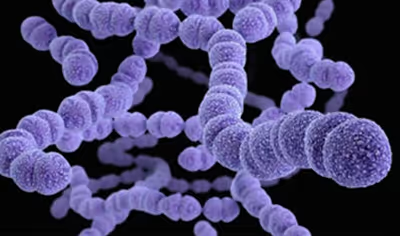
S. pneumoniae
Gram positive
S. pneumoniae
Gram positive
Strain: Gram-positive
Characterstics: shape of a slightly pointed cocci. They are usually found in pairs (diplococci), but are also found singly and in short chains.
Habitat: It is a commensal organism in the human respiratory tract.
Causes: S. pneumoniae is noted as a major cause of infections and mortality in patients with upper and lower respiratory tract infections. They are responsible for the majority of community-acquired pneumonia. However, infection by pneumococcus may be dangerous, causing not only pneumonia, but also bronchitis, otitis media, septicemia, and meningitis.
Resistance to: CDC data showed that Drug resistant Streptococcus pneumoniae (DRSP) are resistant to one or more antibiotics in 30% of cases including: Erythromycin, Trimethoprim/sulfamethoxazole, Vancomycin, Tetracycline, Chloramphenicol and Ofloxacin.Pneumococcal Disease; [1]Reference: CDC https://www.cdc.gov/pneumococcal/drug-resistance.html
Mechanism of resistance: Alterations in the target enzymes for antibiotics have been recognized as a major resistance mechanism in S. pneumoniae.

H. influenzae
Gram negative
H. influenzae
Gram negative
Strain: Gram-negative
Characterstics: rod-shaped bacterium
Habitat: H. influenzae is present as a commensal organism in the nasopharynx of most healthy adults from where it can spread to cause both systemic and respiratory tract infection.
Causes: H. influenzae is present as a commensal organism in the nasopharynx of most healthy adults from where it can spread to cause both systemic and respiratory tract infection. H. influenzae disease refers to many illness, some of the illnesses, like ear infections, are mild while others, like bloodstream infections, are very serious. One type of H. influenzae (Hib) can cause severe infections of both the tissue covering the brain and spinal cord (meningitis) and the bloodstream. The most common types of invasive disease caused by H. influenzae are Pneuminia, Epiglotittis, Cellulitis and Infectious arthritis.Haemophilus influenzae Disease; [1]Reference: CDC https://www.cdc.gov/hi-disease/index.html
Resistance to: H. influenzae were detected for their resistance towards β-lactam antibiotics and early cephalosporins.
Mechanism of resistance: Primary mechanisms are implicated in the resistance of H. influenzae to antibiotics includes enzymatic hydrolysis of the antibiotic, alterations in drug binding proteins and production of β-lactamases.
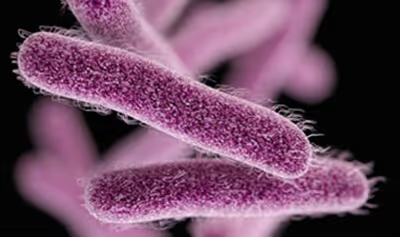
Shigella spp
Gram negative
Shigella spp
Gram negative
Strain: Gram-negative
Characterstics: Nonmotile, nonsporeforming rod-shaped bacteria which are genetically closely related to E. coli.
Habitat: Intestinal pathogen of man and primates often located in contaminated food and water.
Causes: Shigella is the bacterium that causes the disease shigellosis, also known as bacillary dysentery and one of the most easily transmitted bacterial diarrheas. Specific complications caused by Shigella if invaded into bloodstream which includes rectal prolapse, reactive arthritis, toxic megacolon and hemolytic uremic syndrome.
Prevalance: Shigella causes about 500,000 cases of diarrhea in the United States annually.
Mortality: The number of deaths it causes each year is estimated at between 74,000 and 600,000 Shigella – Shigellosis; [1] Reference: CDC https://www.cdc.gov/shigella/general-information.html Mani, Sachin; Wierzba, Thomas; Walker, Richard I (2016). Status of vaccine research and development for Shigella. Vaccine. 34 (26): 2887–2894.
Resistance to: Shigella spp., were earlier susceptible to ampicillin, chloramphenicol, co-trimoxazole and nalidixic acid but now they have developed resistance against fluoroquinolones, cephalosporins and azithromycin. Mechanism of Resistance: These multidrug resistant Shigella spp. were observed extended-spectrum β-lactamase positive and also acquiring quinolone resistance genes with overexpression of efflux pump genes.
Default content
Leading the Fight Against AMR
VMRC is committed to developing therapeutics to meet the challenges of antimicrobial resistance (AMR) and has come up with many solutions under the innovative concept of PLEA (Preserving Life of Existing Antibiotics) using the antibiotic resistance breakers (ARBs) approach or by reducing drug toxicity or drug repurposing. Venus is one of the few research companies working on AMR for almost two decades and has developed a significant product pipeline under patent protection.